



- Campaigns fail when the messaging strategy isn’t part of the product development
- Success comes when companies include marketing in the conversation before roll out
- Rhino Tool House’s Go-to-Market strategy for their RhiKnows service included marketing early
- Watch the video to hear how RhiKnows was launched
Watch BNP Engage’s full conversation with Carly Camacho on the RhiKnows launch
The product is ready. Leadership wants to move. Someone schedules the campaign kickoff, and you find yourself writing ad copy, building landing pages, and briefing a designer. But you’re still trying to figure out what the thing actually is and who it’s actually for.
What can feel like a resource problem is actually a sequencing problem.
But, what does successful sequencing look like, and what does it allow companies to unlock? When marketing is involved alongside product teams, the go-to-market strategy lands at the same time the product is ready to launch. Everyone knows what success metrics to look at. The assets, collateral, and campaigns that marketing launches are producing tangible outcomes, not just random activity.
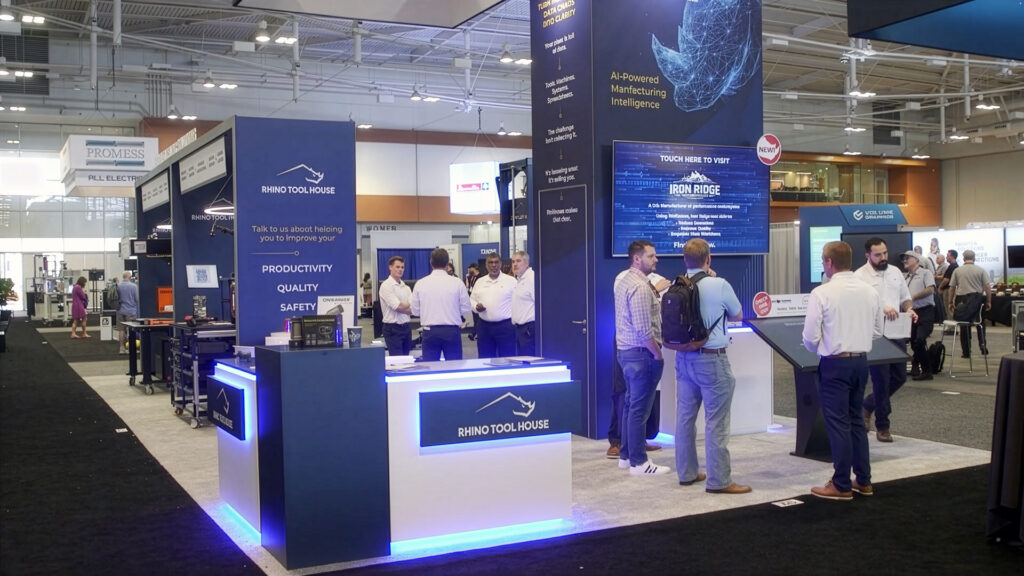
When Rhino Tool House started building an AI-powered platform to help manufacturing plants understand and act on operational data, they included marketing in the process early. The launch included a full brand identity, a trade show presence with a live data demo, custom follow-up sequences, and a campaign that had to speak to a highly specific buyer without alienating everyone else.
It worked. And it didn’t require RTH to have the biggest budget or largest team. It worked because the messaging was finished before the execution started.
What does ‘messaging before execution’ mean for B2B Go-to-Market strategies?
When RTH’s sales engineers identified the core problem — plants were drowning in data but couldn’t extract meaning from it — they didn’t build a product and hand marketing a brief when they were done. They brought marketing into the process. For three years, RTH’s marketing team actively participated in the calls, learning the product from the inside, understanding the customer segments, and working with BNP Engage to develop a message that could actually carry the platform’s value to the right people.
That early access changed what was possible downstream.
When it came time to build a trade show booth that coordinated multiple vendor partners, multiple internal teams, and a live interactive demo, the project had a foundation. The logo was done. The brand hierarchy was done. The core message was done. “We didn’t have to build the plane while we were flying it,” Carly Camacho, Marketing Communications Lead, said.
That’s the difference. When messaging is unresolved at execution time, every deliverable becomes a negotiation. The designer is waiting on the copy. The copy is waiting on positioning. The positioning is still being debated in a meeting. The deadline moves or the quality suffers, usually both.
When the messaging and positioning are clear to everyone, execution becomes a matter of applying decisions that are already made.
How do you define your audience in a B2B GTM strategy?
One of the more instructive decisions RTH made during the RhiKnows development process was pulling back on the product’s “techy” framing.
There was an instinct to focus on technology. An AI platform built to improve manufacturing innovation… makes sense to focus on the tool. But RTH’s broader brand is intentional and people-focused. If RhiKnows positioned itself as a technology-forward product for sophisticated enterprise buyers, it would close the door on the segment of the market that was overwhelmed by their data but not yet ready to bet big on a platform.
The messaging shift they landed on was “start small, scale fast.” This establishes a modular entry point that lets a customer begin with one piece of the platform and expand from there. It’s a positioning decision that looks simple and is actually hard: they identified the buyer who was hesitant, not just the buyer who was excited, and they wrote for that person.
Most B2B messaging doesn’t make this call clearly. Messaging that tries to speak to everyone ends up resonating with no one. The discipline of deciding who you’re not writing for — and being willing to adjust the creative direction to match — is where the messaging work actually happens.
What happens when marketing messaging isn’t finished by product launch?
B2B marketers don’t skip messaging intentionally. They skip it because the timeline doesn’t allow for it. The product is ready, the event is booked, and there’s no room for a six-week positioning exercise before the campaign has to launch.
That pressure is real, but the cost of under-developed messaging shows up in ways that are easy to misattribute. The campaign underperforms and it looks like a targeting problem; the sales team complains the leads aren’t converting and it looks like a qualification problem; the brand feels inconsistent across channels and it looks like a design problem.
Focusing on the symptoms misses the underlying diagnosis: a messaging problem that got inherited by every piece of execution that came after it.
The RTH case shows what becomes possible when messaging is treated as a dependency, something that has to be resolved before certain execution decisions can be made well, the same way a developer can’t build a feature before the requirements are scoped.
How do you get marketing involved in product development earlier?
If the challenge is that marketing gets pulled in late, that’s a structural conversation worth having inside your organization. But it’s also partly a positioning conversation that marketing teams can lead.
The argument is “the execution will cost more and deliver less if we haven’t answered these questions first,” not “we need more time.” Framed around ROI, it’s a case for efficiency and driving value.
Carly and her team had a seat at the table early because RTH’s sales engineers understood that solving the messaging problem was part of solving the product problem. Not every organization starts there. But the teams that make this argument clearly, and back it up with how it changes the quality of what gets built, tend to earn more of that room over time.
BNP Engage works with lean marketing teams like the team at RTH to ensure messaging, positioning, and audience insights are baked into B2B Go-to-Market strategies. If your team needs help building a messaging strategy that drives results, let’s talk.
BNP Engage helps lean B2B marketing teams move faster and make better decisions through industry-informed strategy and focused execution. Follow BNP Engage on LinkedIn for more.